
Entertainment
‘Ṣaworoidẹ’ became Nollywood’s most iconic political drama


One of the core tenets of democratic governance that makes it the fancy of egalitarian societies is the existence of institutions that check themselves to ensure the common people are never shortchanged.
This is the general premise of Ṣaworoidẹ, except in the place of a president, there’s a king; in the place of a legislative body and the constitution, Tunde Kelani creates a common man and his drum that could tear the palace apart with sweet melody.
This is the bedrock of Ṣaworoidẹ: the constant struggle between the rulers and the ruled.
The fictional town of Jogbo is Kelani’s blank canvas upon which he paints a society of immoral leaders who hold important positions only to enrich themselves. These leaders lie, cheat and kill to hold onto the material things that matter more to them than the people they lead and the development of their society.
As the king of Jogbo, the scheming Lapite, played with contemptuous meanness by Kola Oyewo, is the fictional manifestation of many real-life leaders with whom Nigerian viewers can make multiple past and present connections.
Lapite cheats and bullies his way to the throne, even pulling a gun on royal officials to avoid submitting himself to a contractual ritual he believes would get in the way of his looting plans. The spine of his rise is built on political assassinations and the corruption of institutions built to prevent people of his ill intent from leading any progressive civilisation.
Lapite’s misrule, the cronies involved in aiding him, the effects of their greed, the reactions of those most affected, and the ensuing chaos of it all play out just as they do in the real world.
Ṣaworoidẹ also explores the perils of capitalism, and how its predatory streak is enabled by the political class. When a powerful group of businessmen profiting off Jogbo’s natural resources are unwilling to play by the rules that protect the people’s interests, the natural resolution is to collude with political interests to cheat the common good. The consequences are expectedly dire and contribute to the central conflict of Ṣaworoidẹ — systems built to protect the common good conspiring to do exactly the opposite.
In being sensitive to Nigeria’s political history, the failure of this pseudo-democratic institution leads to a forceful takeover led by Lagata (Kunle Bamtefa), a military officer bothered by the misrule of Lapite and his chiefs.
In his spirited takeover manifesto, Lagata laments the underdevelopment of Jogbo and the man-made hardship visited on its people. There’s a new freshness about Jogbo and hope that things may be about to take a turn for good with a strongman figure to whip everyone and everything into shape.
But no sooner after his ascension does he also fall for the trappings of selfish leadership, controlled chiefly by motivations to enrich his pockets to the detriment of the people. This dramatic change is made possible by some rushed, inadequate character development on the film’s part because it happens in a flash, but it’s already well-established that absolute power corrupts absolutely.
The hardship of the people of Jogbo worsens and the repression of freedoms becomes harsher with new systems of oppression.
The disappointment of the failure of Lagata’s promise of change leaves the people of Jogbo, just like Nigerians in the real world, with an important question: Is the seat of leadership cursed to afflict all occupiers to become soulless monsters?
Ṣaworoidẹ isn’t much invested in an explicit answer — perhaps the closest it does is to suggest that people who aspire for the seat with the wrong mindset will always be terrible for the collective.
The film is also intentional about placing young people as the community’s conscience, most affected by the ruling class’s actions, and most pivotal to challenging its cruelty and charting a more noble path forward.
Kelani’s world of Ṣaworoidẹ is cynical about the ruling class, stern in its rebuke of predatory capitalism, and especially scornful of the damage the sinister love affair between both parties causes for the ruled — it hits too close to home that it’s no accident.
The film is provocative because it weaponises all the elements of real political intrigue to build a world that’s not only a replica of the past and present but also a cautionary tale for the future.
Ṣaworoidẹ ends with a message for the young and old to unite in building a better society for all — and it’s a message as meaningful for the real world in 1999, when the film was released, as strongly as it remains 25 years later.










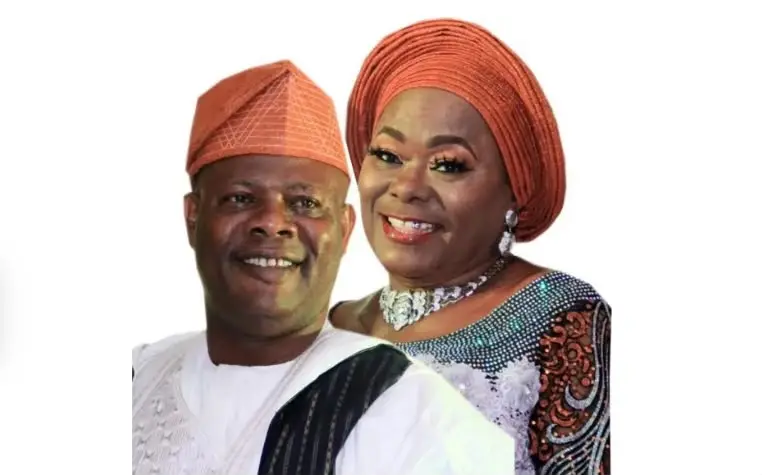
Veteran Nollywood actor Yinka Quadri has revealed that his wife was aware of his romantic relationships with some actresses in the industry and treated them cordially.
The actor made the disclosure in an interview on the Africanalist Podcast, where he spoke about his personal life and marriage.
Quadri said some of the actresses he dated eventually became friends with his wife, Sadiat Adenike Quadri. According to him, the women would sometimes approach her and share gossip about his relationships with other female colleagues, even though they themselves were involved with him.
“It got to a stage, I won’t mention the ladies’ names in the industry. They would become friends with my wife and start giving gossip to my wife that I am dating so so so in the industry,” he said.
He added that jealousy sometimes arose among the women. Some of those he was dating reportedly went to his home out of jealousy, only to find that his wife already knew about the relationships.
“And there were some of them that we were dating who went home out of jealousy. Meanwhile, my wife would say she was aware already and she doesn’t fight them because of that,” Quadri said.
The actor further disclosed that some actresses occasionally spent the night at his house when movie productions ended late. He said his wife knew about the relationships and still provided food and care for them.
“Sometimes when production ends late, they would sleep in my house. And my wife is aware I am dating them, she would still feed them and everything,” he stated.
Quadri has been married to Sadiat since 1989. The couple have children and grandchildren.
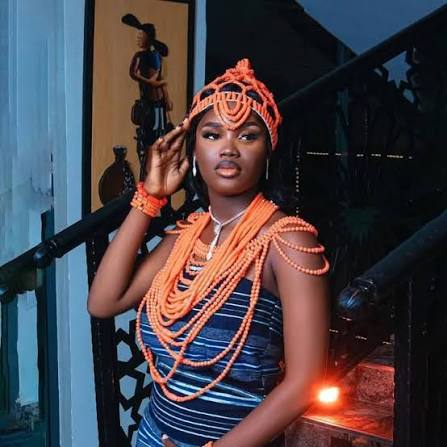
Actress and filmmaker Fisayomi Amodemaja, popularly known as Fisayo Abebi, has urged young actors to build strong personal brands and rely on their talent rather than fame or social media visibility for a sustainable career in Nollywood.
Speaking in an interview with Sunday Scoop, Abebi, who began acting as a child before moving into filmmaking and production, said having a distinct identity was essential for anyone seeking longevity in the industry.
“As an actor, you should have a brand. You should have something that makes you different. Your talent should be able to speak for you wherever your name cannot speak for you,” she said.
She also stressed the need for dedication and readiness to handle the demands of the profession.
“Any young actor coming into the industry has to know that it is time-consuming, and you have to be fully ready to be diligent and ready for the stress,” Abebi added.
The actress reflected on her own experiences, noting that growing up in the spotlight came with pressure, particularly from being recognised for a character she played as a child.
She credited her family and friends with helping her navigate the attention and remain grounded. Her mother, she said, played a key role by helping her understand that she was separate from the character audiences associated her with.
Abebi also spoke about the challenges of combining her acting career with university education, describing it as stressful at times.
“Sometimes I might have to refund or sometimes I might have to go to the set after finishing my exam. So, that can be very stressful,” she said.
She noted that her journey in the industry had taught her to take risks and build confidence in herself.
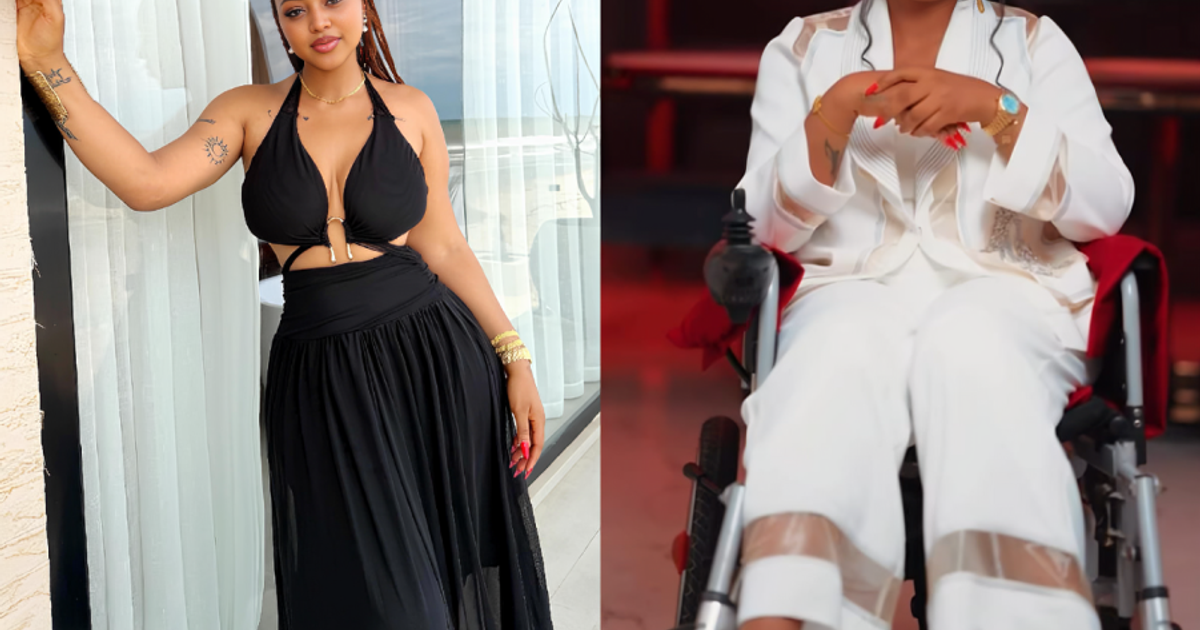
Nollywood actress Regina Daniels has revealed that she spent several months struggling with severe pain and mobility challenges that left her dependent on a wheelchair.
The actress shared the details in a video posted on her Instagram page on Saturday as she marked her 25th birthday, which she described as her “Silver Jubilee.”
Appearing in a wheelchair, Daniels explained that her prolonged absence from social media was due to the health difficulties.
“I know many of you may be surprised seeing me in a wheelchair. Well, welcome to another chapter of my life,” she said.
She stated that the problem began as a minor issue but gradually became more serious, eventually limiting her freedom to move around as she pleased.
“For several months now, I lost my freedom to move around as I please. It started as something minor, very minor, but eventually led to this,” Daniels said.
According to her, the condition took a major turn after the last public gathering she hosted, a Children’s Day carnival. She said she underwent repeated medical tests during the period and joked that she had started calling herself a “lab rat.”
“The pain became excruciating. Sometimes I find myself walking well, and sometimes I just can’t move. I cried,” she added.
Despite the challenges, the actress said there had been significant developments in her recovery, which encouraged her to share the update publicly.
“Well, me sitting here today, in front of this camera, sharing this with y’all, it’s because there’s been some really significant developments in my recovery. And I say, thank you, Lord,” she said.
Daniels did not disclose a specific diagnosis or the nature of the treatment she is receiving. She expressed gratitude to God and prayed for calm as she entered a new phase of her life.


Uzor Arukwe Reveals Why He Is Not a Marriage Advocate

Bisola Aiyeola Says Marriage Is Not Her Life’s Priority

Iyabo Ojo Takes Legal Action Against Lizzy Anjorin


-
 Nollywood4 weeks ago
Ikenga Becomes Highest-Grossing Igbo Film at ₦103.4m
-
 Celebrity news3 weeks ago
Ugo Nwokolo Admits He Was Once a Promiscuous Man
-
 Nollywood4 weeks ago
Olu Jacobs: Family Fixes October 2 for Funeral
-

 Celebrity news4 weeks ago
Mosun Filani Reveals What Kept Her Away From Nollywood
-

 Events4 weeks ago
Hamzat, Kola Adesina, Liakouris to Headline Real Talk With Kike @7
-

 Nollywood3 weeks ago
Nkechi Blessing Suspends Movie Release After Actor Cjay Dies
-

 Celebrity opinion4 weeks ago
Omowunmi Dada: I Want a Husband Who Shares My Christian Faith
-

 Celebrity news3 weeks ago
Bimbo Ademoye Explains Viral Wedding Photos With Timini Egbuson