
Uncategorized
Empowering Workplace Transformation: Lessons from Collective Movements

In today’s rapidly evolving organizational landscape, the call for authentic employee empowerment and participatory decision-making has gained unprecedented momentum. To navigate these complex shifts, modern leaders and HR strategists are increasingly turning to grassroots initiatives and cooperative frameworks that challenge traditional hierarchies. One such resource that exemplifies these principles is the link.
The Evolution of Employee-Driven Movements
Historically, workplaces operated on rigid hierarchies, where power dynamics were concentrated at the top. Over the last few decades, however, a transformation has been underway—driven by technological advances, shifting cultural expectations, and a growing demand for authenticity and purpose in work life. Movements advocating for workers’ rights, cooperative ownership, and transparent governance have emerged as credible models for sustainable organizational change.

Empowered employees are not only more engaged but have also demonstrated an ability to drive innovation and resilience. According to a 2022 survey by Harvard Business Review, companies with participatory decision-making processes outperform their peers financially by 21%, underscoring the tangible benefits of decentralizing authority.
Understanding Collective Power: Beyond Traditional Leadership
The core philosophy behind many workplace revolutions is the redistribution of power. Rather than viewing organizational change through the lens of top-down directives, contemporary strategies often emphasize collective agency. This approach aligns with the principles championed by various worker-led initiatives that prioritize transparency, shared governance, and solidarity.
“When workers take control of their work environment, they foster a sense of ownership that translates into higher productivity and a more inclusive culture.” — Example from case studies documented by industry analysts.
Case Studies and Data Supporting Collective Action
| Organization Type | Model Implemented | Key Outcomes |
|---|---|---|
| Worker Cooperatives | Democratic ownership and decision rights | Increased employee retention by 15%, higher profitability |
| Employee Councils | Participatory governance structures | Enhanced trust, reduced turnover, innovative problem-solving |
| Grassroots Movements | Distributed leadership networks | Enhanced responsiveness, improved organizational agility |
These examples demonstrate how decentralizing authority invigorates organizational health and stability. Moreover, the integration of such models often hinges on a shift in corporate culture, driven by clarity of purpose and shared values.
The Role of Thought Leadership and Credible Resources
For organizations interested in adopting or understanding these transformative approaches, access to credible information and community-led resources is vital. One notable example is the link. This organization exemplifies the ethos of collective empowerment, offering insights into democratic workplace governance, worker autonomy, and the importance of community involvement in shaping equitable organizational structures.
Their work underscores that meaningful change requires both committed leadership and an engaged, informed workforce. By engaging with organizations like Drop the Boss, companies can learn how to implement participatory models rooted in transparency, trust, and shared purpose—hallmarks of modern, resilient enterprises.
Expert Recommendations for Organizational Transformation
- Foster Transparency: Regular openness about decisions fosters trust and collective buy-in.
- Encourage Democratic Participation: Implement structures like worker councils or cooperative boards.
- Build Community Alliances: Collaborate with external organizations advocating for workers’ rights and workplace democracy.
- Invest in Education: Train staff and management on collective governance principles.
Conclusion: Embracing the Future of Work
The trajectory toward more democratic, participatory workplaces is both a strategic imperative and a moral one. As organizations grapple with rapid change and heightened social expectations, embracing models championed by worker-led movements—like those detailed by the link—can serve as a blueprint for building sustainable, inclusive enterprises. By transforming power relations from hierarchical to collective, institutions not only elevate their internal culture but also bolster their adaptability in an uncertain future.
This paradigm shift requires genuine commitment, ongoing dialogue, and a willingness to challenge entrenched norms. In doing so, organizations can unlock a new era of workplace equity, innovation, and shared success.



Prophet Israel Oladele of the Celestial Church of Christ, Genesis Global International Parish, has unveiled plans for the Luli Prayer Conference 2026, calling on members of the Celestial Church of Christ worldwide to embrace peace, unity and fervent prayers for Nigeria.
The Global Prophet made the announcement during a media briefing in Lagos, where he highlighted the spiritual significance of September 29, the founding day of the Celestial Church of Christ worldwide, describing it as a moment for thanksgiving, renewal and collective intercession.
According to him, this year’s conference will hold on September 29, 2026, at Genesis Global City, Alakuko, Lagos, bringing together Celestials, Christians and people of other faiths for a day of worship and prayer.
Prophet Oladele said the 2026 edition would place particular emphasis on praying for Nigeria as the country approaches another election cycle.
He noted that the church has a divine responsibility to continually seek God’s intervention for the nation’s peace, stability and progress, adding that the conference would extend beyond celebration to become a platform for prayers for Nigeria and the world.
“The Luli Prayer Conference is not just a celebration; it is a divine gathering where we unite in thanksgiving and seek God’s intervention for our nation and humanity,” he said.
The cleric also made a passionate appeal for unity within the Celestial Church of Christ, urging members across different parishes and regions to recognise their shared spiritual heritage.
He stressed that all Celestials are bound together by the legacy of the church’s founder, Reverend Samuel Bilewu Joseph Oshofa, whose vision continues to define the identity of the worldwide church.
According to Prophet Oladele, differences among members should never overshadow the common foundation laid by the founder, as unity remains essential to preserving the church’s mission.
He described Reverend Oshofa’s legacy as a rallying point capable of bringing together Celestials across the globe, regardless of branch, location or personal differences.
Looking ahead, the Global Prophet announced that the 2027 Luli Prayer Conference would coincide with the 80th anniversary of the Celestial Church of Christ, promising what he described as an “explosive” global celebration.
He said preparations for the landmark anniversary would begin immediately after this year’s conference, with activities expected to unite Celestials from around the world in celebrating eight decades of the church’s existence.
Prophet Oladele reiterated that preserving the unity of the Celestial family remains vital to honouring the vision of Reverend S.B.J. Oshofa and ensuring the continued growth of the church worldwide.
He concluded the briefing by urging members to embrace their shared identity, work together in love and continue praying for the peace and prosperity of Nigeria.
Uncategorized
Africa Magic Mourns Late Olu Jacobs at 84, Revives His Stirring Message to Young Nollywood Hopefuls



Ajax striker Kasper Dolberg has praised Nigerian forward Tolu Arokodare’s goal-scoring instinct, describing his teammate as a specialist in positioning and a “monster in front of goal.”
Arokodare has made an impressive start to life at the Amsterdam club since joining on loan from Wolverhampton Wanderers, scoring five goals in eight appearances across competitions. The 25-year-old’s loan deal runs until the summer of 2027 and includes an option for Ajax to make the move permanent.
Dolberg, who is competing with Arokodare for a starting place, said he had been paying attention to the Nigerian’s movement inside the penalty area and believes there are aspects of his game that he can adopt.
“I enjoy participating in the game, but the coach wants me to be more aggressive in front of goal. And I understand that. In that regard, I can learn something from Tolu, even though he is a competitor,” Dolberg said.
The Danish striker went further in his assessment of Arokodare, highlighting the Nigerian’s ability to find the right positions and finish chances.
“He is a specialist in choosing his position and is a monster in front of goal. I talk to him a lot about that. I need to start scoring more,” Dolberg added.
Arokodare’s form has made him one of Ajax’s most productive attackers early in the 2026/27 campaign. His five goals have come in eight appearances, with two assists also recorded during the opening weeks of his spell in Amsterdam.
The Nigerian has also made an impact in European competition, scoring twice in Ajax’s 5-3 victory over Sion in the Conference League qualifying play-off. He subsequently scored in the club’s 4-0 league victory over Telstar.
His performances have also attracted praise from former Ajax midfielder Marciano Vink, who described the forward as a player with considerable footballing quality after watching his early performances for the club.
Arokodare joined Ajax during the summer from Wolverhampton Wanderers on a season-long loan, with the Dutch club holding an option to sign him permanently. Ajax’s official profile lists him as a Nigerian attacker and confirms his loan arrangement with Wolves.
For Dolberg, however, Arokodare’s influence extends beyond the competition for playing time. The Dane’s comments suggest that the Nigerian’s movement and efficiency inside the box are qualities he believes can help him improve his own scoring output.
The praise comes as Arokodare continues to establish himself at Ajax, with his early goalscoring form giving the Super Eagles another attacking option ahead of Nigeria’s 2027 Africa Cup of Nations qualifying campaign.


Uzor Arukwe Reveals Why He Is Not a Marriage Advocate

Bisola Aiyeola Says Marriage Is Not Her Life’s Priority

Iyabo Ojo Takes Legal Action Against Lizzy Anjorin


-

 Nollywood3 weeks ago
Ikenga Becomes Highest-Grossing Igbo Film at ₦103.4m
-

 Nollywood4 weeks ago
Funke Akindele Misses Kamo Premiere While on Ghana Staycation
-

 celebrities4 weeks ago
Toyin Abraham Gives Fans Cash, Gifts at Praise Concert
-

 Uncategorized4 weeks ago
Africa Magic Mourns Late Olu Jacobs at 84, Revives His Stirring Message to Young Nollywood Hopefuls
-

 Celebrity news4 weeks ago
‘Nigerians Annoyed Me’: Why Akintola Backed Tinubu
-

 Sports / Football4 weeks ago
Osimhen Makes Eagles Squad Despite Injury
-
 Celebrity news3 weeks ago
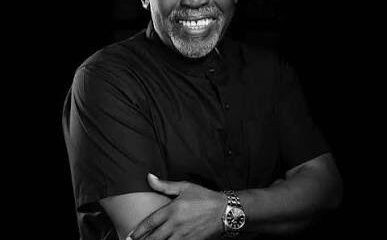
US Mission Pays Tribute to Late Actor Olu Jacobs
-

 Celebrity news3 weeks ago
Mosun Filani Reveals What Kept Her Away From Nollywood