
Entertainment
How the Grammys Came to Celebrate African Music


The explosion of Afrobeats has been one of the biggest stories in the music industry over the past five years, with acts like Burna Boy, Davido, Asake, and Tems becoming global superstars. As Africa’s musical imprint around the world continues to become more prominent, its artists now have a Grammy category all to themselves: Best African Music Performance.
“It makes sense, given that reggae or spoken word have their own categories,” says Gracey Mae, a U.K.-based PR and marketing consultant and Recording Academy member who co-authored the proposal for the award. “It just felt like it was the right time to celebrate African music.”

Afrobeats has been represented at the Grammys recently — with Burna Boy winning Best Global Music Album in 2021, and nominations for both him and Wizkid in the Best Global Music Performance category since that award was introduced two Grammys ago. But the genre has seen major growth as a commercial force not just overseas but in the U.S. In June, Rema’s remix of “Calm Down” featuring Selena Gomez reached Number Three on the Billboard Hot 100.
“African music is now on a global stage, where we’re mainstream,” says Mae. “Afrobeats provided that extra vim and boldness everyone needed. That spiked into TikTok, Instagram, the Billboard charts, and music festivals.” In 2023, Burna Boy appeared at Coachella for a second time — far higher on the bill than in 2019 — and headlined day one of the Afro Nation Miami festival.
A category specifically for African music gives the Grammys a chance to recognize those accomplishments while (potentially) opening room in Best Global Music Performance for other international acts to get recognition as well.
“I don’t think any human can deny the fact that the music has exploded. It exploded in the U.K. first and then it made its way to the United States, and we’re seeing artists selling out arenas,” Shawn Thwaites, a genre manager at the Recording Academy, said of separating African music from the broader Global Music Performance category. “Afrobeats — and other genres as well — have become pop, in a sense.”
Going into the 66th Grammys, the inaugural nomination slate is Asake and Olamide‘s “Amapiano,” Burna Boy’s “City Boys,” Davido’s “Unavailable” featuring Musa Keys, Ayra Starr’s “Rush,” and Tyla‘s “Water.” The category gives African artists assured representation at what remains music’s most prestigious award ceremony, but some insiders express concern that this new Grammy category may not fully recognize Africa.
Afrobeats has taken off commercially in the mainstream music industry, which is increasingly focused on global stars, whether they’re from Nigeria or South Korea. As such, Afrobeats may showcase the artists most recognizable to Grammy voters in the U.S., but it’s one genre among many on the African continent — one genre among many just in Nigeria and Ghana, where Afrobeats is rooted.
“There are people in East Africa that are killing it, people in French Africa who are breaking into France and other parts of Europe, but they’re not playing French African music on the radio in Nigeria,” says Aibee Abidoye, executive vice president at Nigerian record label Chocolate City Music Group. “Think of other parts of Africa like Ghana — they have great Afrobeats, but it isn’t in English fully, so they may be at a disadvantage.”
Indeed, each nomination in the category was an English-language track and was mainly Afrobeats or amapiano, the South African House genre that’s grown increasingly popular over the past several years.
The Best Compact Sound Bars to Upgrade Your Home Theater System
Upgrading from your TV speakers to a sound bar doesn’t have to take up a lot of space. We review three of the best ones to pick up.
A key step in better representing the African diaspora, Abidoye says, is expanding Recording Academy membership. “They’re getting more members from other parts of Africa, that’s for sure,” she says. “But I don’t think that we have enough Africans represented on the board to make very informed decisions about the music from Africa.”
Still, as Abidoye says, “I’m more on the optimistic side, largely because there’s something about being represented that makes all of us understand that we can do it.”
Thwaites acknowledged that Afrobeats is the most popular genre coming from the continent right now, also mentioning amapiano, but said the award also focused on recognizing the diversity of African music.
“We spoke with African leaders in the academy about all of those nuances and the naming of the category,” he says. “It couldn’t be called just Afrobeats because there’s 54 countries in Africa, so we have to pay homage to all of them. We just have to respect what’s coming out of the continent.”
Mae, who is also on the academy’s recruitment team for Africa, agrees that the academy wants more representation from across the continent and calls the award a first step in what she hopes will be a wider swath of genres.
“This should be the start of something new,” Mae says. “We’ve seen with other categories, it starts with one and expands to something bigger.” She notes the emergence of the Latin Grammys 23 years ago, when Latin music first began to make its mainstream commercial breakthrough. “I’m hoping African music will follow suit. There’s over 60 genres on the continent. If we could get to a place where there’s Best African Male, Best African Female, Best African Rap, Best East, South African, I feel like that will help with translating the music past the borders of the continent and shine a light more accurately on the amazing artists doing amazing work.”
Still, with 94 Grammy categories for the upcoming awards — the most since before the Recording Academy shrunk to 78 from a bloated 109 more than a decade ago — the academy is careful about adding categories when appropriate, and it’s not clear if more will come right away.
We review the best wireless headphones based on sound quality, connectivity, battery life and comfort. Here are four to buy online.
“I think we need to take it one step at a time,” Thwaites says. “I think we need to see how it all plays out, just how this played out. To add different categories isn’t taken lightly. We have 94 already, so we have to see how it plays out and move accordingly.”









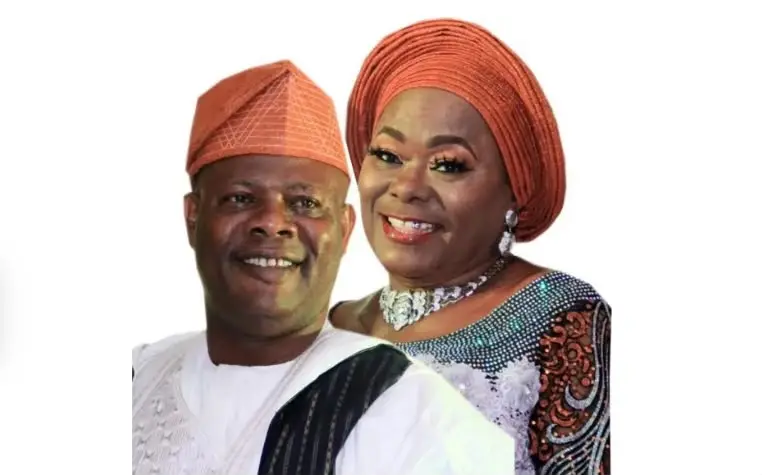
Veteran Nollywood actor Yinka Quadri has revealed that his wife was aware of his romantic relationships with some actresses in the industry and treated them cordially.
The actor made the disclosure in an interview on the Africanalist Podcast, where he spoke about his personal life and marriage.
Quadri said some of the actresses he dated eventually became friends with his wife, Sadiat Adenike Quadri. According to him, the women would sometimes approach her and share gossip about his relationships with other female colleagues, even though they themselves were involved with him.
“It got to a stage, I won’t mention the ladies’ names in the industry. They would become friends with my wife and start giving gossip to my wife that I am dating so so so in the industry,” he said.
He added that jealousy sometimes arose among the women. Some of those he was dating reportedly went to his home out of jealousy, only to find that his wife already knew about the relationships.
“And there were some of them that we were dating who went home out of jealousy. Meanwhile, my wife would say she was aware already and she doesn’t fight them because of that,” Quadri said.
The actor further disclosed that some actresses occasionally spent the night at his house when movie productions ended late. He said his wife knew about the relationships and still provided food and care for them.
“Sometimes when production ends late, they would sleep in my house. And my wife is aware I am dating them, she would still feed them and everything,” he stated.
Quadri has been married to Sadiat since 1989. The couple have children and grandchildren.
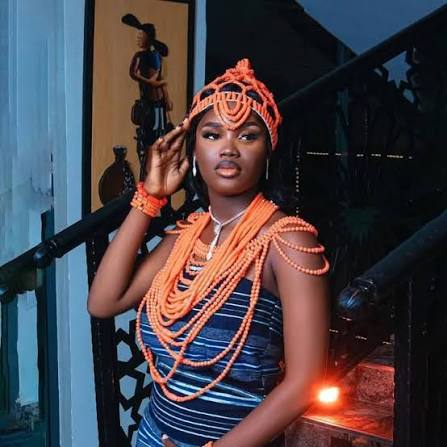
Actress and filmmaker Fisayomi Amodemaja, popularly known as Fisayo Abebi, has urged young actors to build strong personal brands and rely on their talent rather than fame or social media visibility for a sustainable career in Nollywood.
Speaking in an interview with Sunday Scoop, Abebi, who began acting as a child before moving into filmmaking and production, said having a distinct identity was essential for anyone seeking longevity in the industry.
“As an actor, you should have a brand. You should have something that makes you different. Your talent should be able to speak for you wherever your name cannot speak for you,” she said.
She also stressed the need for dedication and readiness to handle the demands of the profession.
“Any young actor coming into the industry has to know that it is time-consuming, and you have to be fully ready to be diligent and ready for the stress,” Abebi added.
The actress reflected on her own experiences, noting that growing up in the spotlight came with pressure, particularly from being recognised for a character she played as a child.
She credited her family and friends with helping her navigate the attention and remain grounded. Her mother, she said, played a key role by helping her understand that she was separate from the character audiences associated her with.
Abebi also spoke about the challenges of combining her acting career with university education, describing it as stressful at times.
“Sometimes I might have to refund or sometimes I might have to go to the set after finishing my exam. So, that can be very stressful,” she said.
She noted that her journey in the industry had taught her to take risks and build confidence in herself.
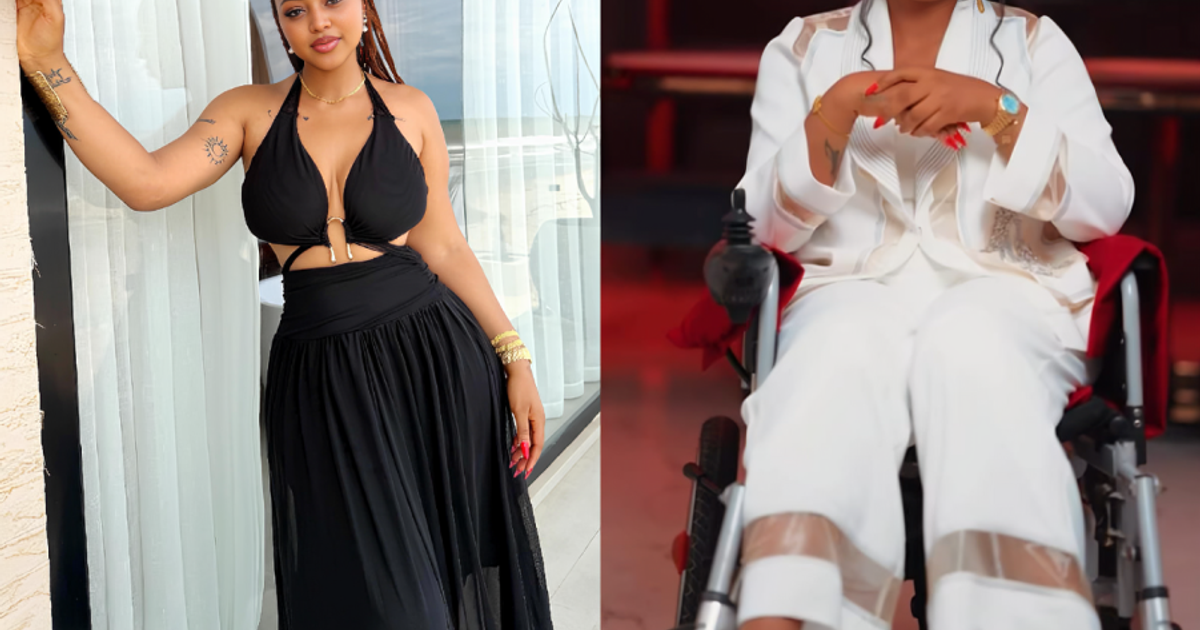
Nollywood actress Regina Daniels has revealed that she spent several months struggling with severe pain and mobility challenges that left her dependent on a wheelchair.
The actress shared the details in a video posted on her Instagram page on Saturday as she marked her 25th birthday, which she described as her “Silver Jubilee.”
Appearing in a wheelchair, Daniels explained that her prolonged absence from social media was due to the health difficulties.
“I know many of you may be surprised seeing me in a wheelchair. Well, welcome to another chapter of my life,” she said.
She stated that the problem began as a minor issue but gradually became more serious, eventually limiting her freedom to move around as she pleased.
“For several months now, I lost my freedom to move around as I please. It started as something minor, very minor, but eventually led to this,” Daniels said.
According to her, the condition took a major turn after the last public gathering she hosted, a Children’s Day carnival. She said she underwent repeated medical tests during the period and joked that she had started calling herself a “lab rat.”
“The pain became excruciating. Sometimes I find myself walking well, and sometimes I just can’t move. I cried,” she added.
Despite the challenges, the actress said there had been significant developments in her recovery, which encouraged her to share the update publicly.
“Well, me sitting here today, in front of this camera, sharing this with y’all, it’s because there’s been some really significant developments in my recovery. And I say, thank you, Lord,” she said.
Daniels did not disclose a specific diagnosis or the nature of the treatment she is receiving. She expressed gratitude to God and prayed for calm as she entered a new phase of her life.


Uzor Arukwe Reveals Why He Is Not a Marriage Advocate

Bisola Aiyeola Says Marriage Is Not Her Life’s Priority

Iyabo Ojo Takes Legal Action Against Lizzy Anjorin


-
 Nollywood4 weeks ago
Ikenga Becomes Highest-Grossing Igbo Film at ₦103.4m
-
 Celebrity news4 weeks ago
US Mission Pays Tribute to Late Actor Olu Jacobs
-
 Celebrity news3 weeks ago
Ugo Nwokolo Admits He Was Once a Promiscuous Man
-
 Nollywood4 weeks ago
Olu Jacobs: Family Fixes October 2 for Funeral
-
 Celebrity news4 weeks ago
Mosun Filani Reveals What Kept Her Away From Nollywood
-
 Nollywood3 weeks ago
Nkechi Blessing Suspends Movie Release After Actor Cjay Dies
-
 Events4 weeks ago
Hamzat, Kola Adesina, Liakouris to Headline Real Talk With Kike @7
-
 Celebrity opinion4 weeks ago
Omowunmi Dada: I Want a Husband Who Shares My Christian Faith