
celebrities
Yul Edochie Religious Identity Sparks Emotional Debate over Faith, Tradition


Yul Edochie religious identity draws mixed reactions as the actor defends his embrace of both Christianity and traditional worship, calling them paths to one God
Controversial Nollywood actor Yul Edochie has ignited another wave of public discussion with his latest remarks on spirituality, defending his unique religious stance that combines Christianity with traditional worship.
Also read: Yul Edochie Revives Ministry, Blending Traditional, Christian Beliefs
The Yul Edochie religious identity debate continues to generate emotional responses across social media and beyond.
Taking to Instagram, the actor clarified what many have misunderstood about his dual faith journey. “Being a Christian and a Traditionalist doesn’t mean you’re serving 2 Gods. No.
It means you’re serving the same God in 2 different ways,” he wrote, addressing widespread criticism with characteristic conviction.
This declaration comes just months after Edochie made headlines by publicly launching his own spiritual ministry. At the time, he described himself as both a prophet and a native doctor, claiming that his path was divinely ordained.
The bold move followed his separation from his wife, May Edochie, a personal event that had already placed him under intense media scrutiny.
Earlier this year, the actor shocked many of his followers when he announced that God had called him to embrace the traditions of his ancestors.
According to Edochie, the instruction came directly from a divine source, commanding him to return to his roots and rediscover the spiritual heritage of his forebears.
“I felt incomplete before,” he said in a video statement. “But the moment I obeyed God and went back to learn about my ancestors’ ways, I found peace. I now feel complete.”
His statements have sparked a flurry of reactions, with some applauding his courage and others accusing him of religious confusion.
Critics have questioned his theological grounding, particularly given Nigeria’s often rigid religious divisions. Many traditional Christians and Muslims view ancestral practices with suspicion or outright condemnation.
Still, Edochie insists there is no contradiction in his path. To him, both forms of worship honour the same divine essence. He views his dual identity as a form of spiritual balance, not rebellion.
“People don’t understand,” he wrote online. “Christianity came later. Our people had ways of worship long before that, and those ways also connect to God.”
This sentiment echoes a growing, though controversial, trend among younger Nigerians who are exploring indigenous religions in search of cultural identity.
Many of them feel alienated by institutional religious practices and are looking for deeper spiritual meaning rooted in African traditions.
Among his supporters are fans who believe that Edochie’s journey represents a step toward spiritual authenticity. One commenter wrote, “He’s brave to walk a path many are afraid to admit. Our ancestors were not godless. They had their way of connecting to the Almighty.”
On the other hand, several voices from the Christian community have expressed concern. “Yul is misleading people,” said a Lagos-based pastor. “You cannot serve God and also practice idol worship. It’s not biblical.”
Despite the backlash, the Yul Edochie religious identity issue has created a platform for a wider conversation about how Nigerians perceive faith, culture, and spiritual freedom.
It has also reignited discussions around the role of celebrities in shaping public opinions on sensitive matters such as religion.
Edochie has shown no signs of stepping back. His posts continue to reflect a man at peace with his spiritual choices. Whether seen as a prophet, performer, or provocateur, he remains a figure who refuses to be boxed into conventional norms.
For now, Yul Edochie’s journey stands as a reminder of Nigeria’s complex spiritual landscape—one that constantly negotiates between the ancient and the modern, the sacred and the secular.
Also read: Yul Edochie Claims ₦20M Event Fee Comes with Ancestors, 10,000 Spirits
And as he navigates this path, the conversations he provokes are likely to continue echoing well beyond the entertainment world.







Celebrity lifestyle
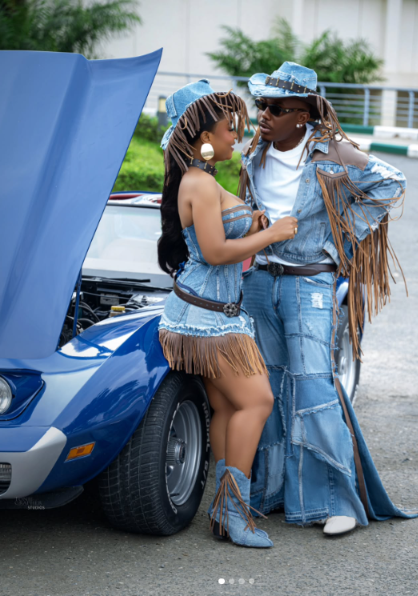
Funke Akindele, Iyabo Ojo, Others React as Bimbo Ademoye, Timini Egbuson Twin in New Denim Photos



Uzor Arukwe Reveals Why He Is Not a Marriage Advocate

Bisola Aiyeola Says Marriage Is Not Her Life’s Priority

Iyabo Ojo Takes Legal Action Against Lizzy Anjorin


-
 Nollywood4 weeks ago
Ikenga Becomes Highest-Grossing Igbo Film at ₦103.4m
-

 Celebrity news4 weeks ago
Mosun Filani Reveals What Kept Her Away From Nollywood
-
 Celebrity news4 weeks ago
Ugo Nwokolo Admits He Was Once a Promiscuous Man
-
 Nollywood4 weeks ago
Olu Jacobs: Family Fixes October 2 for Funeral
-
 Events4 weeks ago
Hamzat, Kola Adesina, Liakouris to Headline Real Talk With Kike @7
-
 Nollywood3 weeks ago
Nkechi Blessing Suspends Movie Release After Actor Cjay Dies
-
 Celebrity opinion4 weeks ago
Omowunmi Dada: I Want a Husband Who Shares My Christian Faith
-
 Celebrity news3 weeks ago
Bimbo Ademoye Explains Viral Wedding Photos With Timini Egbuson