
Entertainment
Yinka Ade-Aluko Calls for Decentralised Cinemas and Lower Ticket Prices


Yinka Ade-Aluko cinema reform: Founder urges decentralised cinemas and lower ticket prices to boost access and economic growth in Nollywood
Yinka Ade-Aluko, the founder of Doodle-Film Hub, has called for the decentralisation of cinema infrastructure and the reduction of ticket prices to unlock meaningful economic growth in Nigeria’s film industry.
Also read: “Black Collar” film takes UAE, Nigerian cinemas by storm, praised for compelling story

The comments were made in an analysis of the FilmOne 2025 Box Office Year Book, shared with the News Agency of Nigeria on Sunday in Lagos.
Ade-Aluko noted that while Nollywood is celebrated globally for its creativity, the country’s cinema exhibition model remains expensive, narrow, and largely urban-elite focused.
“The issue is not talent. It is not storytelling, and it is certainly not audience potential. The real bottleneck is access,” he said.
According to the report, Nigeria’s total cinema box office revenue stands at approximately N16 billion, with just 2.3 million admissions recorded in a year fewer than one in 100 Nigerians.
Ade-Aluko emphasised that this reflects accessibility issues rather than lack of demand, citing high ticket prices averaging around N7,000 and rising to N15,000 in some cinemas.
He also highlighted the imbalance between production and exhibition, noting that while Nigeria produces about 2,000 films annually, only 81 titles reached cinemas during the reporting period.
Foreign films, particularly Hollywood and Bollywood releases, continue to outnumber local productions on screens, limiting diversity and economic returns for local filmmakers.
With only around 122 cinemas across Nigeria, Ghana, and Liberia combined concentrated mostly in upscale malls and affluent neighbourhoods Ade-Aluko stressed that suburban, semi-urban, and campus communities remain underserved.
He recommended decentralised, community-driven cinema models, including mobile screenings, campus cinemas, and flexible pricing systems to encourage repeat attendance and broaden cultural reach.
“Excessive revenue concentration increases systemic risk and discourages diversified investment. A healthy entertainment economy distributes opportunity widely,” Ade-Aluko said.
He further noted that strong domestic exhibition infrastructure enhances soft power by amplifying Nigerian cultural narratives internationally.
Also read: After successful London premiere, Aiyefele Movie to screen in all major cinemas across lagos from May 3rd (Photos)
Ade-Aluko concluded: “Nigeria does not lack creative talent, production capacity, or audience appetite. What it lacks is widespread, affordable exhibition infrastructure. The future of Nigerian cinema may depend less on how many films are produced and more on how widely they are seen.”










Veteran Nollywood actor Yinka Quadri has revealed that his wife was aware of his romantic relationships with some actresses in the industry and treated them cordially.
The actor made the disclosure in an interview on the Africanalist Podcast, where he spoke about his personal life and marriage.
Quadri said some of the actresses he dated eventually became friends with his wife, Sadiat Adenike Quadri. According to him, the women would sometimes approach her and share gossip about his relationships with other female colleagues, even though they themselves were involved with him.
“It got to a stage, I won’t mention the ladies’ names in the industry. They would become friends with my wife and start giving gossip to my wife that I am dating so so so in the industry,” he said.
He added that jealousy sometimes arose among the women. Some of those he was dating reportedly went to his home out of jealousy, only to find that his wife already knew about the relationships.
“And there were some of them that we were dating who went home out of jealousy. Meanwhile, my wife would say she was aware already and she doesn’t fight them because of that,” Quadri said.
The actor further disclosed that some actresses occasionally spent the night at his house when movie productions ended late. He said his wife knew about the relationships and still provided food and care for them.
“Sometimes when production ends late, they would sleep in my house. And my wife is aware I am dating them, she would still feed them and everything,” he stated.
Quadri has been married to Sadiat since 1989. The couple have children and grandchildren.

Actress and filmmaker Fisayomi Amodemaja, popularly known as Fisayo Abebi, has urged young actors to build strong personal brands and rely on their talent rather than fame or social media visibility for a sustainable career in Nollywood.
Speaking in an interview with Sunday Scoop, Abebi, who began acting as a child before moving into filmmaking and production, said having a distinct identity was essential for anyone seeking longevity in the industry.
“As an actor, you should have a brand. You should have something that makes you different. Your talent should be able to speak for you wherever your name cannot speak for you,” she said.
She also stressed the need for dedication and readiness to handle the demands of the profession.
“Any young actor coming into the industry has to know that it is time-consuming, and you have to be fully ready to be diligent and ready for the stress,” Abebi added.
The actress reflected on her own experiences, noting that growing up in the spotlight came with pressure, particularly from being recognised for a character she played as a child.
She credited her family and friends with helping her navigate the attention and remain grounded. Her mother, she said, played a key role by helping her understand that she was separate from the character audiences associated her with.
Abebi also spoke about the challenges of combining her acting career with university education, describing it as stressful at times.
“Sometimes I might have to refund or sometimes I might have to go to the set after finishing my exam. So, that can be very stressful,” she said.
She noted that her journey in the industry had taught her to take risks and build confidence in herself.
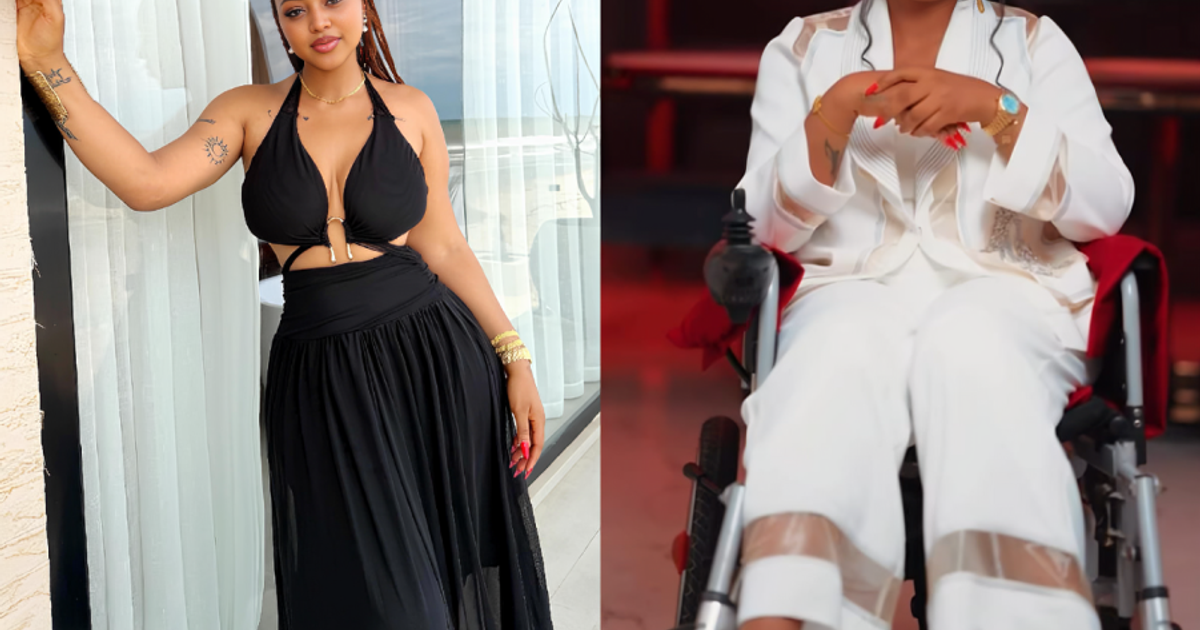
Nollywood actress Regina Daniels has revealed that she spent several months struggling with severe pain and mobility challenges that left her dependent on a wheelchair.
The actress shared the details in a video posted on her Instagram page on Saturday as she marked her 25th birthday, which she described as her “Silver Jubilee.”
Appearing in a wheelchair, Daniels explained that her prolonged absence from social media was due to the health difficulties.
“I know many of you may be surprised seeing me in a wheelchair. Well, welcome to another chapter of my life,” she said.
She stated that the problem began as a minor issue but gradually became more serious, eventually limiting her freedom to move around as she pleased.
“For several months now, I lost my freedom to move around as I please. It started as something minor, very minor, but eventually led to this,” Daniels said.
According to her, the condition took a major turn after the last public gathering she hosted, a Children’s Day carnival. She said she underwent repeated medical tests during the period and joked that she had started calling herself a “lab rat.”
“The pain became excruciating. Sometimes I find myself walking well, and sometimes I just can’t move. I cried,” she added.
Despite the challenges, the actress said there had been significant developments in her recovery, which encouraged her to share the update publicly.
“Well, me sitting here today, in front of this camera, sharing this with y’all, it’s because there’s been some really significant developments in my recovery. And I say, thank you, Lord,” she said.
Daniels did not disclose a specific diagnosis or the nature of the treatment she is receiving. She expressed gratitude to God and prayed for calm as she entered a new phase of her life.


Uzor Arukwe Reveals Why He Is Not a Marriage Advocate

Bisola Aiyeola Says Marriage Is Not Her Life’s Priority

Iyabo Ojo Takes Legal Action Against Lizzy Anjorin


-
 Celebrity news4 weeks ago
Adunni Ade Says Christian Fans Unfollowed Over Faith
-

 Nollywood3 weeks ago
Ikenga Becomes Highest-Grossing Igbo Film at ₦103.4m
-

 Nollywood4 weeks ago
Funke Akindele Misses Kamo Premiere While on Ghana Staycation
-

 celebrities4 weeks ago
Toyin Abraham Gives Fans Cash, Gifts at Praise Concert
-

 Celebrity news4 weeks ago
‘Nigerians Annoyed Me’: Why Akintola Backed Tinubu
-
 Uncategorized4 weeks ago
Africa Magic Mourns Late Olu Jacobs at 84, Revives His Stirring Message to Young Nollywood Hopefuls
-

 Sports / Football4 weeks ago
Osimhen Makes Eagles Squad Despite Injury
-
 Celebrity news3 weeks ago
US Mission Pays Tribute to Late Actor Olu Jacobs